
Home / Co-management
Co-management
In the ISR, decisions about fish and marine mammals are shared. The Inuvialuit are directly involved in managing their own resources.
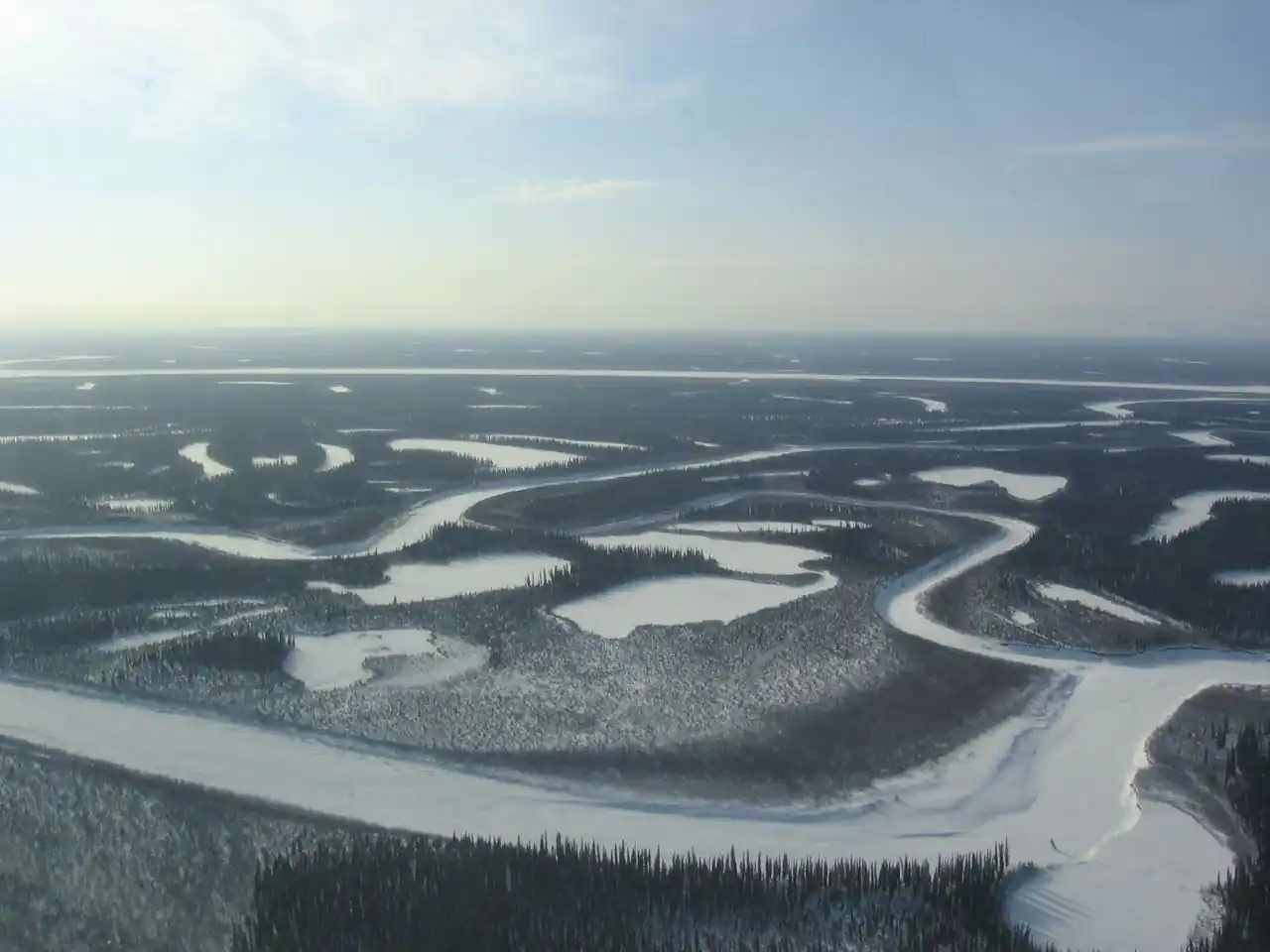
Photo: mattcatpurple, CC BY-SA 2.0, credits
How it works
One of the big differences between wildlife management in the Inuvialuit Settlement Region and most of Canada is that several federal responsibilities have been transferred to, or are shared with, the Inuvialuit and the co-management bodies set up under the Inuvialuit Final Agreement in 1984.
For fish and marine mammals, three are responsible together: the FJMC, the Inuvialuit (through the Inuvialuit Game Council and the six Hunters and Trappers Committees), and Fisheries and Oceans Canada.
Management follows an adaptive cycle, reviewed and revised again and again: identify management options, set up monitoring, develop stock indicators, track decisions, evaluate the measures and their outcomes, then revise the strategy as needed.
The partners
- Inuvialuit Game Council
- Represents the collective Inuvialuit interest in wildlife. Two representatives from each HTC sit on its board, and it appoints the Inuvialuit members of every co-management body under the IFA, including the FJMC.
- Hunters and Trappers Committees
- One in each of the six communities, responsible for certain harvesting rights and management functions under the IFA. The FJMC meets each HTC through its community tours and the annual HTC Presidents meeting.
- Fisheries and Oceans Canada
- The federal department that shares management responsibility. Its Minister appoints the two Canada members.
- Joint Secretariat
- Supports the Inuvialuit co-management bodies in Inuvik. FJMC staff work from its office.
- Other IFA bodies
- The Wildlife Management Advisory Council (North Slope), the Wildlife Management Advisory Council (NWT), the Environmental Impact Screening Committee and the Environmental Impact Review Board.
- Inuvialuit Regional Corporation
- Established in 1984 to manage the settlement under the IFA.
The FJMC also works with the Gwich'in Renewable Resources Board, Parks Canada, the Government of the Northwest Territories, the Inuit Circumpolar Council, Inuit Tapiriit Kanatami, and Alaska's North Slope Borough and Department of Fish and Game. Partner links
What makes it work
- Real authority. The FJMC's responsibilities are written into the IFA. It makes decisions, it does not only advise.
- Control of research funding. The FJMC allocates federal funding for fisheries research and monitoring in the ISR, so priorities are set independently.
- Shared responsibility. The FJMC, the Inuvialuit and DFO manage the resources together.
- Balance. Inuvialuit and Canada members sit on the committee in equal numbers.
- Transparency and regular communication, which have built community trust.
- Trust and respect, built over years by bringing science, traditional and local knowledge, and different views into decisions.
Further reading: Ayles, Bell and Hoyt (2007), Adaptive fisheries co-management in the Western Arctic PDF
Fisheries management plans
Most plans began when a community raised a concern about an important subsistence species. A working group of the FJMC, the HTCs and DFO looks at the concern, weighs scientific and local knowledge, and recommends how to manage the stock. The plans aim to protect fish and marine mammal stocks, meet the subsistence needs of communities now and in future, and encourage cooperation among everyone who uses them.
Arctic char, Paulatuk
Arctic char, Ulukhaktok
Dolly Varden
- Integrated Fisheries Management Plan for Dolly Varden of the Gwich'in Settlement Area and ISR, NWT and Yukon North Slope, 2019 PDF
- Big Fish River Fishing Plan: community harvest of char at Shingle Point, the river mouth and the Fish Hole. AHTC, 2014 PDF
- Dolly Varden IFMP 2011-2015, Volume 1: The Plan PDF
Inuvik-to-Tuktoyaktuk Highway
Working groups
The FJMC takes part in a fisheries working group in each ISR community, each focused on a local concern. They bring together the FJMC, the HTCs and DFO, set and review goals, and meet regularly.
- Paulatuk Char Working Group
- Ulukhaktok Char Working Group
- West Side Working Group
- Husky Lakes ITH Community Fishing Plan Working Group
- Seal Working Group
Beluga
Generations of Inuvialuit and their ancestors have traditionally managed and sustainably used the beluga that summer in the Canadian Beaufort Sea. Beluga remain the most revered socio-cultural species to the Inuvialuit, so beluga monitoring and research is a priority for the Inuvialuit and the FJMC.
Harvest monitoring
The Inuvialuit beluga harvest is monitored through the FJMC Fish and Marine Mammal Community Monitoring Program, led together by the HTCs, DFO and the FJMC. Monitors record the hunt location, whether any whales were lost, whether a calf was with a female, the whale's colour, sex and measurements, and take samples such as skin, blubber, blood, the lower jaw and stomach contents. Over many years these measurements show the health of the stock and how it changes.
Beluga resources
- Beaufort Sea Beluga Management Plan: 2024, 2013, 2005, 2001, 1998, 1991
- Inuvialuit HTCs beluga hunting bylaws and guidelines PDF
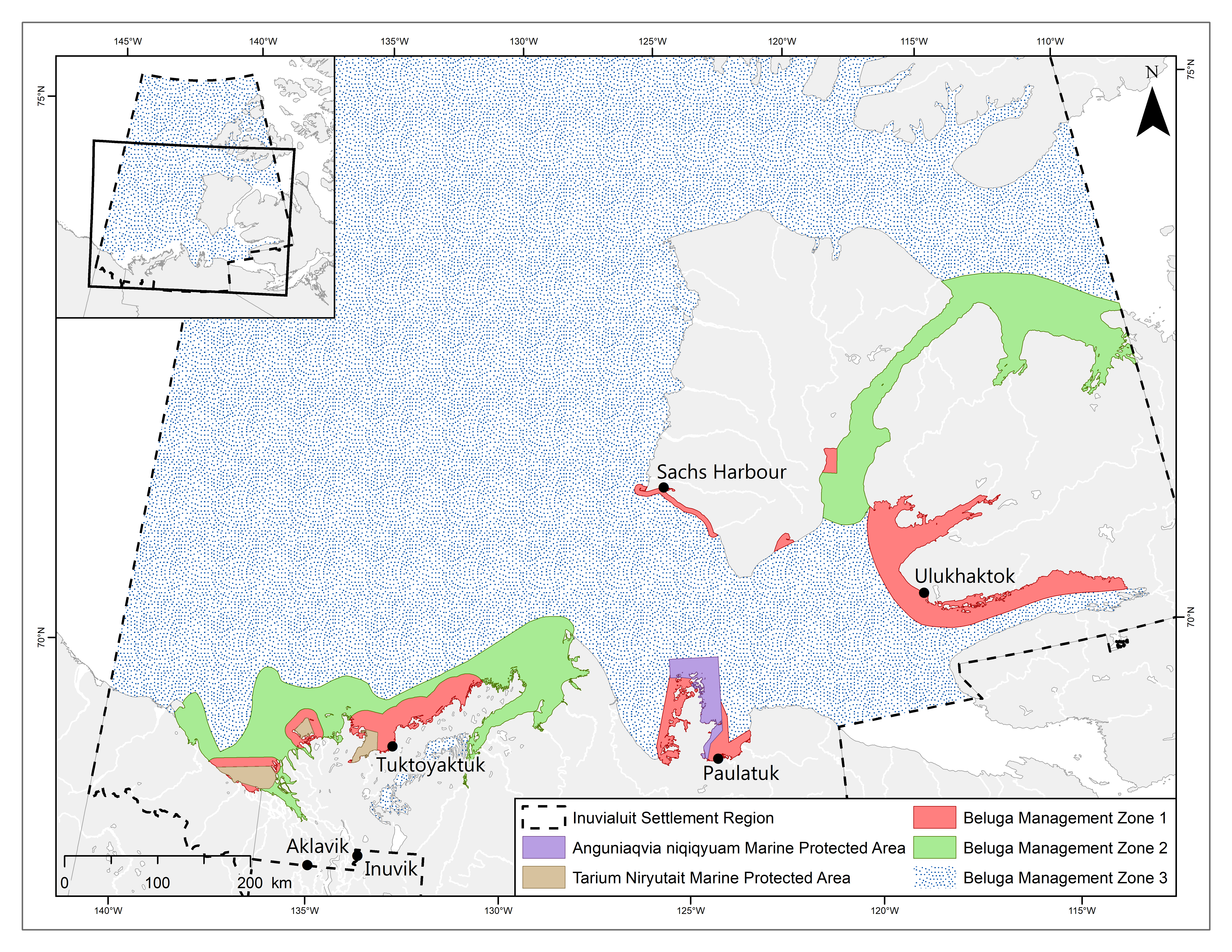
- Map: beluga management zones, MPAs and Inuvialuit whaling camps (image on fjmc.ca)
- Beaufort Beluga, research and monitoring in the ISR
Marine Protected Areas
DFO, the FJMC and the Inuvialuit manage the ISR's Marine Protected Areas together, overseen by the Western Arctic Marine Protected Area (WAMPA) Steering Committee.
Tarium Niryutait Marine Protected Area
Designated in 2010 under the Oceans Act, to conserve beluga and other marine species and their habitat, to sustain one of the world's largest summering stocks of beluga, and to preserve Inuvialuit harvesting traditions. Its three areas in the Mackenzie River estuary are Niaqunnaq (Shallow Bay), Okeevik (East Mackenzie Bay) and Kittigaryuit (Kugmallit Bay).
Management plan 2013 PDF and monitoring plan 2013 PDF
Anguniaqvia niqiqyuam Marine Protected Area
In Darnley Bay near Paulatuk: rich waters used by Arctic char, beluga, polar bears, thick-billed murres and many other species, and an important Inuvialuit harvesting area. Announced as a Marine Protected Area on 16 November 2016. See a day in the life there in the film The Keepers of Darnley Bay.
Traditional and local knowledge workshop for the Paulatuk Area of Interest PDF