Managed together, for the generations to come.
The Fisheries Joint Management Committee: Inuvialuit and Canada caring for the fish and marine mammals of the Inuvialuit Settlement Region since 1986.
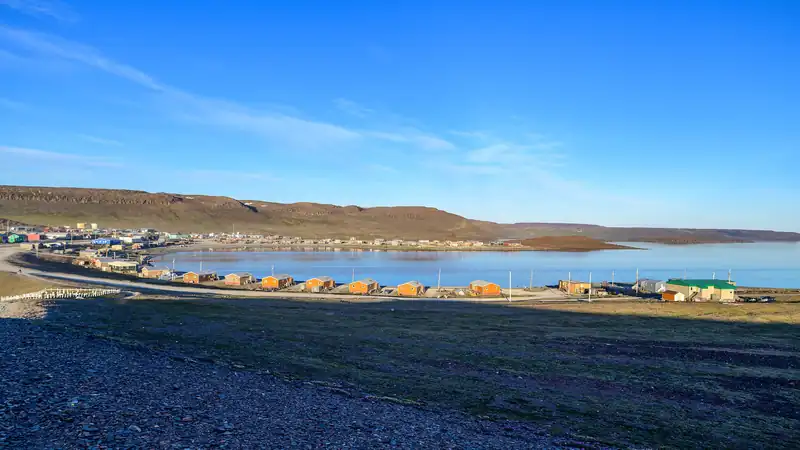
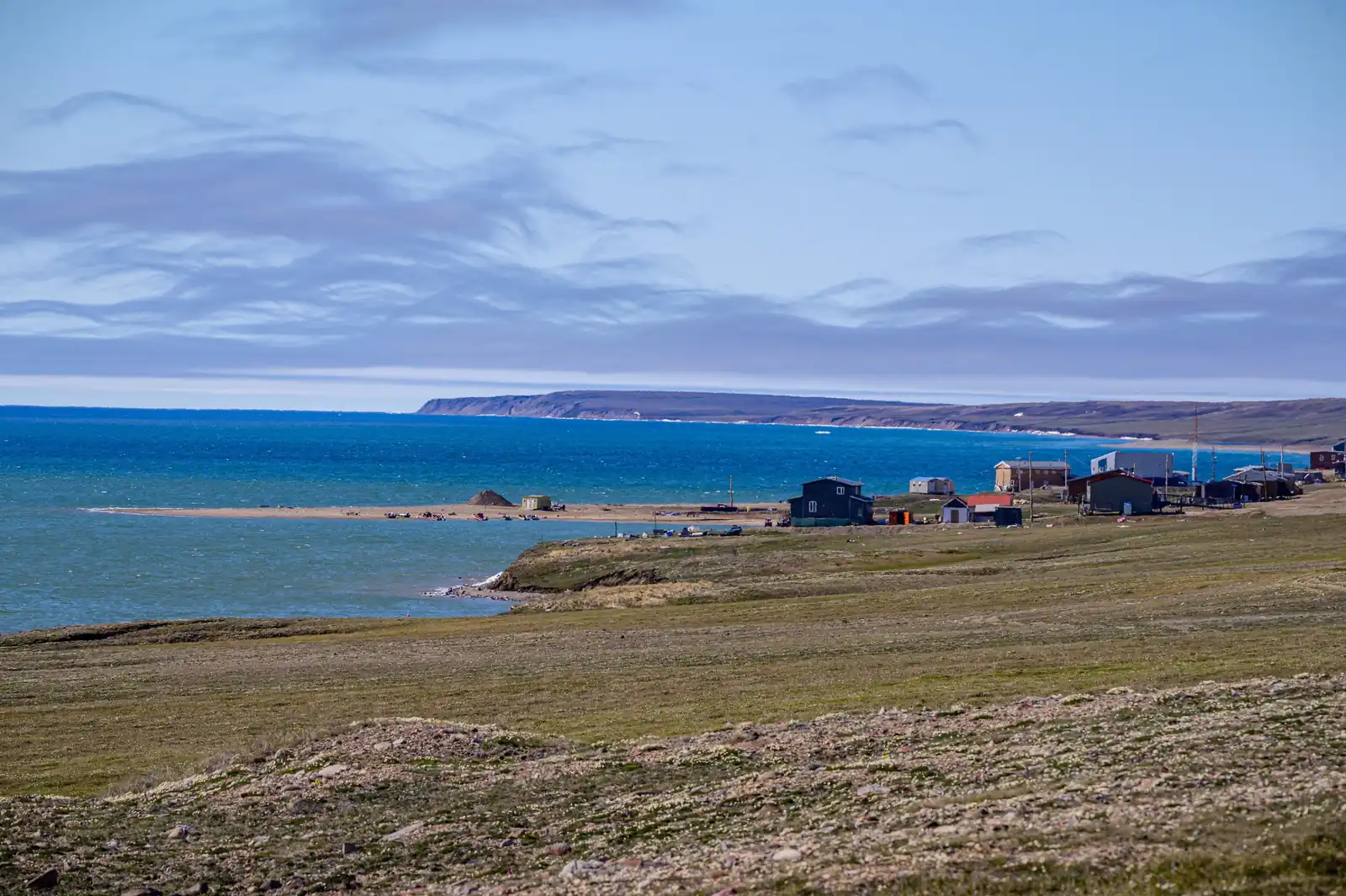
Ikaahuk (Sachs Harbour). Photo: Stephan Sprinz, CC BY 4.0
Six communities, six Hunters and Trappers Committees. Co-management with the Inuvialuit Game Council and Fisheries and Oceans Canada.
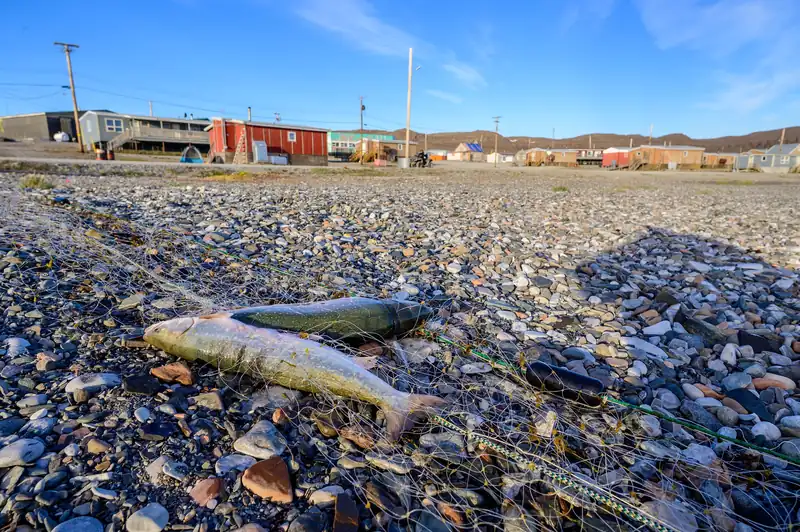
Planning to fish in the Inuvialuit Settlement Region?
Everyone needs a GNWT sport fishing licence, validated for the ISR. The validation is free. To fish on Inuvialuit private lands, you must register your plans first, with the local HTC or here.
- RegisterTell us who you are and how to reach you.
- PlanWhere, when and what you hope to catch. About a month ahead is best.
- FishHave your plan validated at the local HTC office, then go fishing.
- ReportTell us what you caught, so the stocks can be looked after.
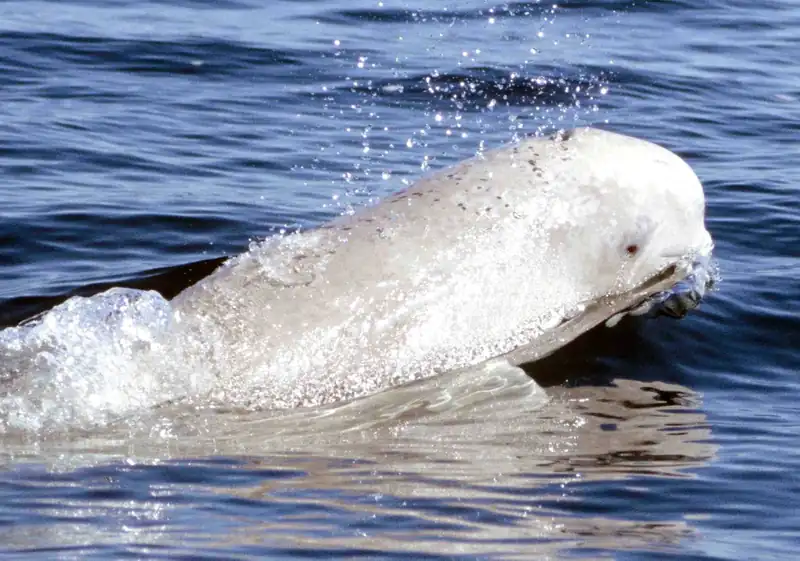
In summer, beluga gather in the Mackenzie River estuary.
Generations of Inuvialuit and their ancestors have managed and used the beluga that summer in the Canadian Beaufort Sea. FJMC calls beluga the most revered socio-cultural species to the Inuvialuit, and a cornerstone of the Inuvialuit diet.
Hunters and Trappers Committees, Fisheries and Oceans Canada and the FJMC monitor the harvest together. Three areas of the estuary, Niaqunnaq, Okeevik and Kittigaryuit, form the Tarium Niryutait Marine Protected Area.
Inuvialuit knowledge and science, side by side.
The FJMC applies sound scientific and Indigenous knowledge to the fish and marine mammals of the ISR. Recent reports and plans, written with the communities:
Technical Report 2026-01. Olokhaktomiut HTC, Lea and others.
Technical Report 2024-04. Aklavik HTC, Lea and others.
Technical Report 2024-05. Worden and Elanik.
Technical Report 2024-03. Campbell and others, with all six HTCs.
An FJMC year.
Four regular meetings keep the committee in touch with the HTCs and with Fisheries and Oceans Canada.
Program budgets for the year ahead, and final research funding decisions.
The committee visits three ISR communities to meet each HTC. Their concerns shape next year's priorities.
Each HTC's concerns and priorities, gathered into the annual research priority list.
At DFO's Freshwater Institute: research presentations, short proposals and the MPA steering committee.
Talk to us in Inuvik.
FJMC staff work out of the Joint Secretariat office.
- 76 Mackenzie Road, Inuvik
Box 2120, Inuvik, NT X0E 0T0 - (867) 777-2828
Fax (867) 777-2610 - Shannon O'Hara, Resource Coordinator
Lauren Aarts, Resource Biologist